

Short-term vs long-term rentals in Dubai: which suits investors?
11 min read 8

Short-term lets can pull in bigger rent, but you'll work harder for it. Long-term is steady and much simpler for most Dubai property investors.
Quick answer
Short-term rentals in Dubai are under 6 months and always need a DET holiday home permit. Long-term means 12 months or more, registered on Ejari. Short-term might earn more when bookings are strong but you'll pay with more admin, guest turnover, and costs. Long-term is reliable, simpler, and preferred by many investors. Neither rental type changes your Golden Visa eligibility.
Short-term and long-term rent in Dubai: what actually separates them
Dubai splits rentals into two buckets: if it's under 6 months, it's short-term and comes with strict conditions, extra fees, and a pile of admin. You need a DET holiday home permit for any stay under 6 months, no exceptions. Over 12 months? That's long-term, and you register on Ejari with the Dubai Land Department watching. Try to fudge this line, and you risk fines, NOC headaches, or even getting blocked for future visas.
What is a short-term let?
If you're renting your place for less than 6 months at a go, Dubai calls that short-term. Tourists, business travellers, people passing through—those are your main guests. You can't just put it on Airbnb and hope for the best. The DET holiday home permit is mandatory. Your property must be furnished, including the basics: beds, proper kitchenware, decent Wi-Fi. Skip any of these, and your application will bounce. Every guest pays the Tourism Dirham, a nightly tax. As of November 2026, less than 6 months is the rule, and you can't cheat it with rolling monthlies. The DET system picks up on that fast.
What is a long-term rental?
Long-term means 12 months or more, with a registered Ejari contract. Most tenants are residents working or living in Dubai. Rent is usually paid by cheque (1, 2, or 4), and utilities (DEWA) get switched to the tenant’s name. The Dubai Land Department and RERA cover all the paperwork and disputes. Under 6 months never qualifies as long-term, even if you both sign a contract that says so.
How long is a short-term rental in Dubai?
Anywhere from a day to just under 6 months. Many booking platforms and the DET portal set a cap of 90 days per booking, but guests can renew. If you're thinking of a 7-month stay, you'll need a long-term Ejari contract. Dubai doesn’t offer a real ‘medium-term’ category, so you’re either short or long-term and have to stick to those rules.
Is 6 months a short-term rental?
Six months is the dividing line. A 6-month contract is long-term and goes on Ejari with added fees and paperwork. But if your contract is even a day less—say five months, 29 days—it's still short-term and DET gets involved.
How each system works: permits, paperwork, where people get stuck
Short-term and long-term follow totally different rules. The steps, the documents, the admin—none of it overlaps. Most trouble happens in the details.
Short-term rental: steps and documents
- You must get an NOC from your building management or owners’ association first. Many Downtown, Marina, and Palm towers won't give it, or they charge extra. With no NOC, DET won't even open your file.
- Full furnishing is required: beds, cookware, Wi-Fi, linens—no wiggle room. If you forget a detail, your permit sits in limbo.
- Apply for a DET holiday home permit on the Dubai Tourism portal. Have your title deed, passport or Emirates ID, NOC, most recent DEWA bill and sometimes a DLD payment slip ready. DET's fee is typically 1,500–2,000 for the first year, but always check before you submit.
- Tourism Dirham registration happens online, and you’ll be charging your guests a fee (10–20 per bedroom, per night).
- You can handle bookings yourself using DET-approved platforms, or hire a licensed agency to do it all. Agencies take a cut, but most owners prefer them to avoid daily admin.
The biggest hurdles? Missing or slow NOCs, documents with mismatched names (title deed and permit application must match exactly), and surprise DET inspections. If your unit isn't up to standard, or you sneak in guests who aren't tourists, DET will pull your permit with zero warning.
Long-term rental: steps and documents
- Write a standard 12-month tenancy agreement using the DLD or Ejari portal template.
- Get the tenant’s Emirates ID, passport, and rent/security deposit cheques. The deposit is usually 5% if unfurnished, 10% if it’s furnished.
- Register the contract on Ejari at a typing centre or on the DLD REST app. You’ll need the title deed, your passport, Emirates ID, tenancy contract, current DEWA bill, and the tenant’s papers.
- Switch DEWA utilities to the tenant’s name. These days, non-resident tenants are rare, but if you have one, sometimes DEWA stays in your name.
No need for a DET permit or Tourism Dirham. Most problems come from expired documents, incomplete files, bounced cheques, or an Ejari system hang-up. Forget Ejari, and suddenly your tenant can't renew their visa or get a bank account. That’s where most files get stuck.
Building and community rules
Many high-rise towers in Downtown, Business Bay, or the Palm either block short-term rentals or slap on a yearly fee per unit. Villas in communities like Arabian Ranches or Emirates Living are usually more flexible, but always ask your building or community office before you buy or switch. Long-term letting is generally fine in most places, except serviced apartments or branded hotel-residences—then, written approval is a must.
Income, costs and effort: a blunt comparison
Everyone wants the top-line numbers, but what matters is how much effort you’re willing to put in, and what the real costs are.
Rental income: what you can actually expect
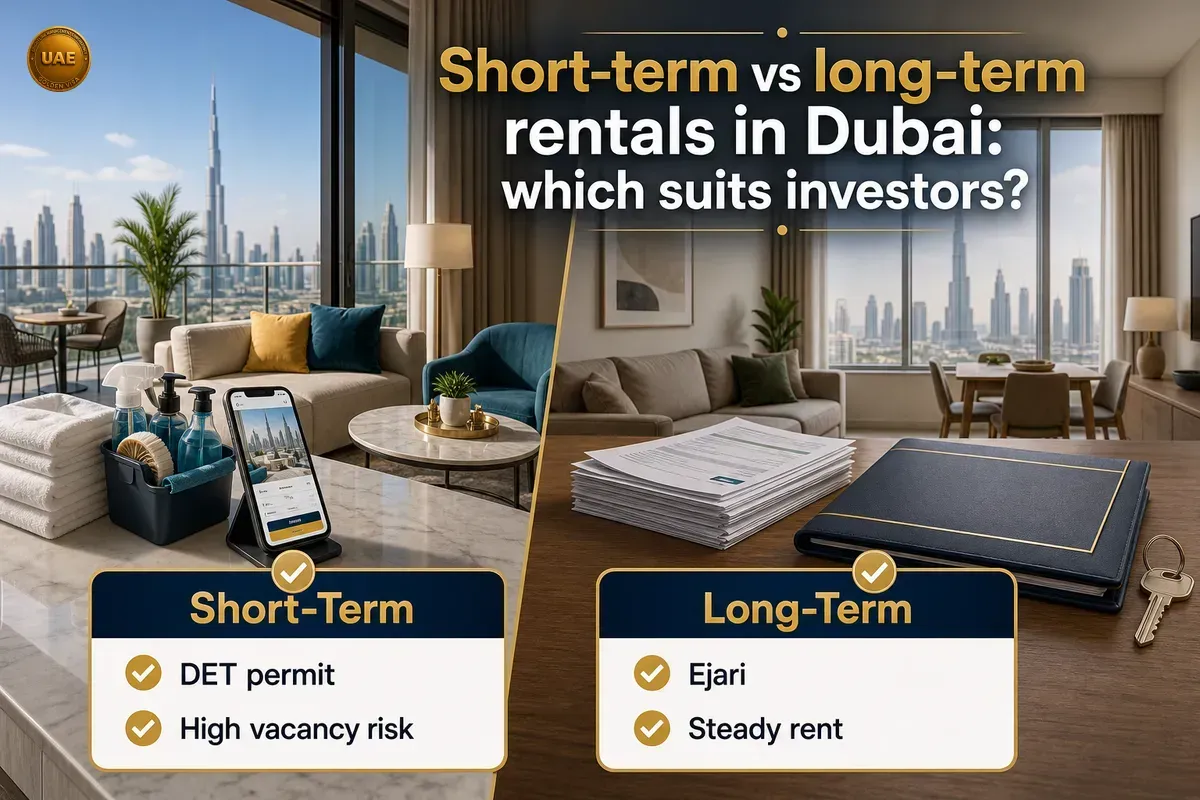
Short-term often looks more profitable, especially during high tourist season. But when summer hits, booking rates nosedive and your property can sit empty. Long-term is boring—steady rent, few gaps, and RERA’s rent cap keeps things predictable. Many first-timers get swept up by short-term profit projections and forget about the costs: platform fees, slow months, and the pain of high vacancy. In truth, a 1-bedroom flat in Downtown sometimes makes more as long-term. After you pay agency and cleaning, short-term often isn’t the goldmine ads suggest.
Costs and fees you have to watch
- Short-term: Big ticket items: DET permit (1,500–2,000), full fit-out with furniture, cleaning (often 100–250 per stay), Tourism Dirham per room/night, platform fees (12–20%), agency management (20–25% cut), all utilities and maintenance on your tab, and extra wear and tear.
- Long-term: Ejari registration fee (set by the government), optional property management (usually 5–8% yearly), plus long-term repairs and service charges for the owner. Utilities are usually on the tenant.
Short-term is expensive and takes real time if you self-manage. Most owners pay for an agency, and those fees add up quickly.
Day-to-day management: hands-off or hands-on?
- For short-term lets, you or your agent handle every guest check-in and out, cleaning, supplies, reviews, and bookings. Expect a call or message every week unless you outsource everything to an agency.
- For long-term, once your tenant's in and Ejari’s done, you might go months without a single message. The tenant pays the bills and handles most fixes. You'll only hear from them for big repairs or if a dispute hits DLD.
If you're overseas, short-term is nearly impossible to handle solo. You need someone on the ground. Long-term is much easier to self-manage, especially if all your units are close by.
| Feature | Short-Term Rent | Long-Term Rent |
|---|---|---|
| Contract length | 1 night up to just under 6 months | 12 months (minimum 6 months) |
| Permit required | DET Holiday Home Permit | Ejari through DLD |
| Gross income (typical) | Higher but variable | Lower but steady |
| Vacancy risk | High (seasonal swings) | Low (fixed term) |
| Main costs | Furnishing, cleaning, management, DET fees | Management (optional), maintenance |
| Utilities | Paid by owner | Paid by tenant |
| Effort | High (unless fully managed) | Low |
| Rules | Building NOC, DET, Tourism Dirham | Ejari, DLD, RERA rent cap |
| Best for | Tourist areas, high season, hands-on investors | Family areas, steady income, remote owners |
Tax and investment side effects: what changes, what stays the same
Dubai doesn't tax your rental income. But if you own from overseas, your home country might want a slice, so keep that in mind.
Do short-term or long-term rentals make more money?
Short-term can top long-term in good tourist months, especially in JBR, Palm, or Downtown. But after agency, cleaning, vacancy, and repair costs, the difference in net income is rarely above 10–15% in most years. If you manage everything yourself, you might squeeze out a bit more. Pay an agency, and your net often matches a solid long-term rental with almost zero stress.
Short-term vs long-term rental tax in Dubai
No personal tax on rental income here. For short-term, you do need to register and pay the nightly Tourism Dirham to the DET. If you own through a company, corporate tax might apply, but most private owners aren’t affected. Residential rents avoid VAT. But some countries (UK, India, Russia, etc.) tax worldwide income—so declare your Dubai rent if required.
Does rental style affect Golden Visa or property investor visa?
Nope. Golden Visa and property investor visa only care about property value, not how or how long you rent. Both Ejari and DET permits are accepted. The only documents that matter are the title deed and, sometimes, a DLD valuation. We can handle these online (Property Revaluation). Rental history does nothing for eligibility. And since the latest DLD rule, no one needs a bank NOC for Dubai property visas (Bank NOC no longer required for any Dubai property visa — from our desk).
When short-term makes sense, when long-term is safer
Location and your appetite for admin decide which route wins. Some owners are visa-focused, others want every possible dirham from high season. What's your goal?
Best areas for each style in Dubai
- Short-term: Jumeirah Beach Residence, Dubai Marina, Downtown, Palm Jumeirah, City Walk, Bluewaters Island. Tourists pack these spots in winter.
- Long-term: JVC, Motor City, Silicon Oasis, Arabian Ranches, Mirdif, Jumeirah Park. Families stick around, and long-term tenants make life easier.
If a short-term let tempts you, get written proof from the building that holiday homes are allowed. Many shiny towers in 'hot' areas quietly block them.
Who fits short-term letting best?
- If you own a high-end, fully furnished flat in a tourist area.
- If you’re happy to self-manage—or don’t mind losing 20–25% to a management agency.
- If empty periods and frequent turnover are fine, hoping for higher returns in peak months.
- If you want to use the property yourself when it’s free.
Who suits long-term letting?
- If you want steady, simple income.
- If you live abroad, are new to Dubai, or can’t bother with permits and guest calls.
- If your property sits in a family community or far from tourist traffic.
- If your main goal is a property visa, not squeezing out seasonal profits.
For residency or Golden Visa, both rental styles work fine. If you’re stuck picking the right unit for visa purposes, check Choosing Dubai property for long-term residency.
Switching between rental styles: common pitfalls
Many owners want to switch styles—sometimes a tenant moves out, or building rules suddenly change. This is where paperwork can tangle fast.
Permit and contract changes
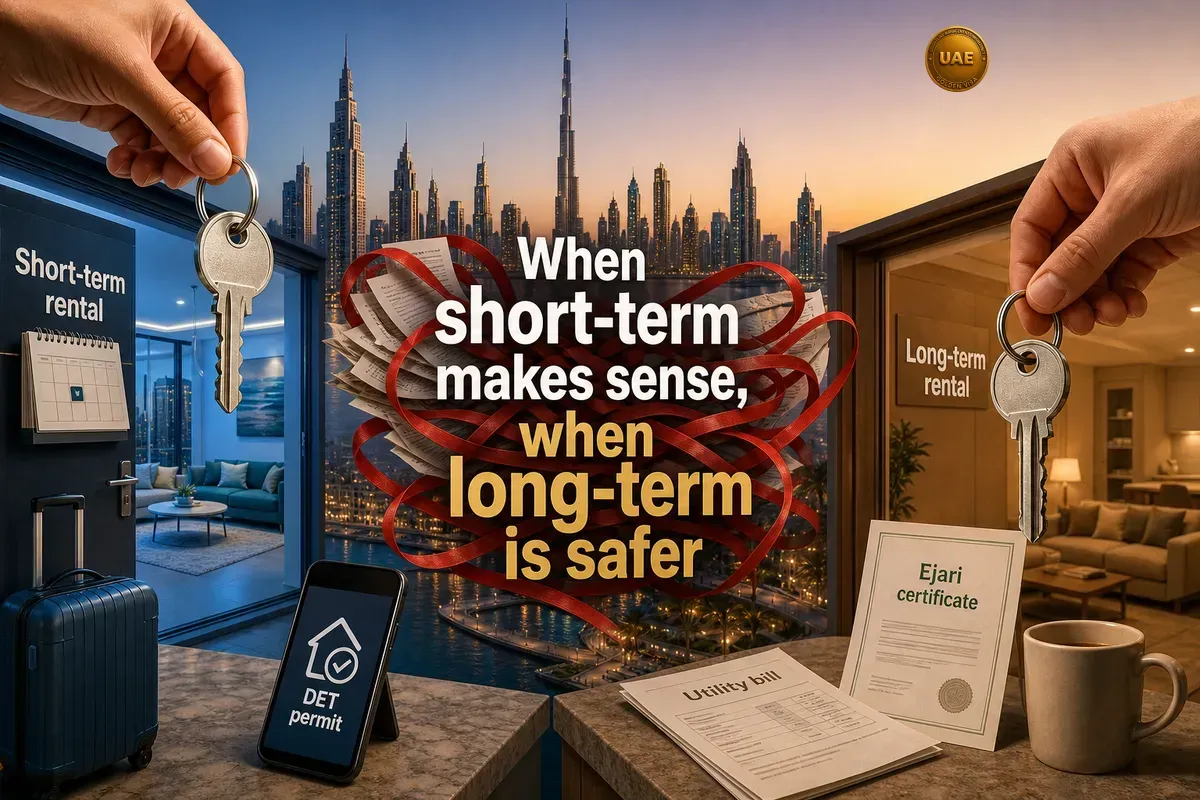
- If you’re moving from long-term to short-term, let the lease finish and get the tenant out. Cancel the Ejari (proof from DLD is essential), then apply for your DET holiday home permit with the NOC and all usual docs.
- Changing from short-term to long-term? First, cancel the DET permit. Write and register a new Ejari lease, and shift utilities to the tenant.
Double-booking trips up more owners than you'd guess. Don’t market your place before the current contract is ended and the new permit is live. Forgetting to cancel permits or contracts leads straight to fines or compliance blocks. Always keep written proof when switching—DET and DLD don't accept “I thought it was done” as an excuse.
Where things go wrong
- No building NOC for short-term—DET says no, and your application sits idle or gets cancelled.
- Leaving Ejari active by mistake blocks utilities and delays your next tenant.
- Starting bookings before DET permit approval—this risks fines, and sometimes guests can’t even get past security.
- Switching at the wrong time can cost you prime booking season or a rock-solid long-term tenant.
If your case is messy or you’re unsure which step comes first, talk to us. The order of paperwork makes all the difference.
Want the nitty-gritty? Full step-by-step guides are here: Listing a Dubai property on short-stay platforms: holiday home permit rules (2026) and Golden Visa or investor visa: which is better for a long-term stay?.
Frequently asked questions
How long is a short-term let in Dubai?
Short-term rentals in Dubai are any lease or booking under 6 months. Anything 6 months or longer must be registered as a long-term tenancy on Ejari.
Can I rent my property short-term if it’s in a residential building?
Only if your building or community allows short-term or holiday home lets. You must obtain a No Objection Certificate (NOC) from building management before applying for a DET holiday home permit. Many buildings, especially in central Dubai, do not allow short-term rentals.
Do short-term or long-term rentals make more money after costs?
Short-term can bring higher gross rent in tourist areas and peak seasons, but after deducting management, cleaning, and platform fees, net income is often only slightly higher than long-term, and sometimes lower in low season.
Does renting short-term affect my eligibility for a Golden Visa?
No. Golden Visa and property investor visa eligibility depend only on property value and ownership, not rental type. Both short-term and long-term lets qualify as long as the investment threshold and other requirements are met.
Is 6 months considered short-term or long-term in Dubai?
Six months is the dividing line. Contracts for 6 months or more are long-term and must be on Ejari. Anything less than 6 months is short-term and requires a DET permit.
What documents do I need to switch from long-term to short-term letting?
You'll need to cancel your Ejari contract (get confirmation from DLD), obtain a building NOC, provide your title deed and ID, and then apply for a DET holiday home permit. Never advertise or book short-term guests until your permit is approved.
Keep reading
Dubai Golden Visa Stay Requirements 2026: Eligibility, Documents, and Common Mistakes Explained
As of November 2026, Dubai Golden Visa holders can stay outside the UAE for over 6 months without losing their residency. Learn eligibility rules, required documents, photo specs, and how to avoid the mistakes that get files stuck.
· 10 min read

Dubai Golden Visa for Teachers: 2026 Eligibility, Step-by-Step Requirements, and Common Pitfalls
Teachers and education staff can now get Dubai’s 10-year Golden Visa. See if you qualify, what documents you'll need, fees, and tips to avoid file delays.
· 11 min read1

UAE Golden Visa: Long-Term Residency, Not Permanent Status
The UAE Golden Visa is a renewable 10-year residency—never permanent. Here’s what you really get, plus where applications usually get stuck.
· 6 min read1